Have you suddenly noticed big black flies in your house, especially in the kitchen, living room, or around windows? If so, you’re not alone. These large, slow‑moving flies can be unsettling, particularly when they seem to appear out of nowhere.
In most cases, a sudden surge of big black flies points to a nearby breeding source: often decaying organic matter such as forgotten food or a food waste bin, pet waste, or s an unknown animal carcass in a loft, chimney, or wall cavity. Changing seasons and access points around doors and windows can also play a major role.
This guide explains what these big black flies are, why you might suddenly have lots of them, the health risks they can pose, and how to prevent and get rid of them for good.
What Are Big Black Flies?
When people notice black flies in the house, they are often referring to larger species. Unlike the common small housefly, these flies are more noticeable because of their size and slower movement.
Correct identification matters because different black flies have different breeding sites, seasonal patterns, and treatment options.
What Are the Different Types of Big Black Flies in the UK?
Let’s explore the most common types of big black flies that could be invading your indoor spaces.
Cluster Flies
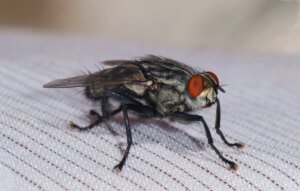
These flies are slightly larger than the average housefly and are dark grey or black. They usually enter homes in autumn as they seek warm places to overwinter. If you’re noticing particularly big black flies that are sluggish in their movements, this is likely your culprit.
Cluster flies often gather in lofts, around window frames, and in upper‑floor rooms. They may become active on warm winter days or in early spring.
House Flies
Smaller than a cluster fly, these are most common in the summer months. You’re likely to see a lot of these if there is decaying organic matter somewhere in your home.
House flies breed rapidly in rubbish, pet waste, and food spillages, and can move between indoors and outdoors through open doors and unscreened windows.
Drain Flies
These flies breed in standing water or organic matter in drains, which is why you may see them in kitchens or bathrooms.
Drain flies (also known as moth flies) are small and fuzzy, and are often seen resting on walls near sinks and showers. Seeing a drain fly can be a sign of a build‑up inside pipes.
Related Reading: Most Common Bugs in the Home
Carpenter Flies
Often mistaken for pests that damage wood, these flies usually don’t cause structural issues but can be a nuisance indoors.
Carpenter flies are typically an outdoor species that may wander inside by accident, especially if lights are left on at night near open doors.
Identifying the type of black fly you’re dealing with is the first step toward resolving the problem.
Why Do I Suddenly Have Large Flies in My House?
Finding big black flies in your house can feel sudden, but there are several reasons why they appear.
The two most common reasons for a sudden increase in black flies are:
- Decaying organic matter in the home, such as forgotten human or pet food,
- A carcass of an animal, such as in a chimney, loft, or other cavity.
However, there are many other reasons you could suddenly get a lot of black flies, such as:
- Seasonal Changes
Many larger black flies enter homes during the cooler months to escape the cold. They seek out shelter in warm areas of the home and become dormant over winter. Come spring, they become active again. So you might see an increase in big black flies, particularly cluster flies, around autumn and spring.
Cluster flies, in particular, tend to seek shelter in attics, wall voids, and other warm areas. This means you may notice them in large numbers all of a sudden in the autumn as temperatures drop, or in the spring as things warm up and they become active again.
Homes near fields, pasture, or woodland often see more cluster flies, as adults migrate from outdoor resting sites to overwinter inside buildings.
- Breeding Sites Indoors
Big black flies often lay eggs in areas with decaying organic matter. If you have forgotten rubbish, compost, or food residue in drains, it can become a breeding ground. Drain flies, for instance, multiply quickly in moist environments and may seem to appear out of nowhere. Common house flies will also be attracted to any decaying organic matter.
Indoor breeding hotspots include kitchen bins, utility rooms, pet areas, and poorly cleaned drains with heavy organic build‑up.
- Open Doors and Windows
Larger flies can enter homes through gaps in screens, doors, or windows. If your home has recently had more foot traffic or doors left open, you might suddenly notice big black flies indoors.
Damaged or missing fly screens, ill‑fitting back doors, and open patio doors in summer are common entry points for house flies and other large black flies.
- Nearby Outdoor Breeding Areas
Garden conditions can attract flies that eventually make their way inside. Compost piles, pet waste, or clogged gutters can become breeding sites for flies, so keeping your outdoor space tidy is critical. Flies may hover around doors and windows before making their way into your home.
Horse manure, dog faeces, uncovered compost, and waterlogged plant pots near the house can all serve as breeding sites for outdoor flies that feed an indoor fly problem.
Health Risks of Black Flies Indoors
While most large black flies in houses are not known to transmit dangerous diseases like mosquitoes do, they can still pose health risks. Flies are attracted to decaying matter and garbage, which means they can carry bacteria from these sources into your kitchen or other living areas. Moreover, a sudden infestation of flies can trigger allergies or irritate respiratory issues.
But there is also a health issue to be aware of. House flies can transfer bacteria such as E. coli and Salmonella to food and food preparation areas.
For households with young children, elderly residents, or anyone with asthma or allergies, even a moderate fly infestation can pose a risk.
How to Prevent Big Black Flies
The good news is that many big black fly infestations can be prevented with a few proactive steps:
- Seal Entry Points
Make sure windows, doors, and vents are properly screened and sealed. This prevents flies from finding easy access points.
Fit or repair fly screens on frequently opened windows and doors, and use brush seals or draught excluders around back doors and patio doors.
- Maintain Clean Drains and Bins
Regularly clean sinks, drains, and rubbish bins. For drain flies, using a drain brush or an enzymatic cleaner can remove the organic material they feed on.
Empty kitchen and pet food bins daily in warm weather, rinse them out, and keep lids tightly closed to reduce odours that attract flies.
- Remove Standing Water
Flies need moisture to breed. Check for leaky pipes, clogged gutters, or pet water bowls that may be sources of water.
Fix dripping taps, clear blocked gutters and downpipes, and avoid leaving standing water in plant saucers or buckets around the property.
- Garden Maintenance
Keep compost, leaf piles, and other organic waste away from the house perimeter. Consider using sealed compost bins to reduce outdoor breeding.
Store wheelie bins away from back doors, keep compost covered, and pick up pet waste promptly to limit outdoor fly breeding near the home.
| We Can Help Don’t have time to sort a fly infestation yourself? Get in touch with Total Pest Control on 0800 772 0554 for affordable and effective fly control services. We cover Oxford, the South East, the South West, the Midlands, and London. Read more about our flying insect pest control here |
How to Get Rid of Big Black Flies in Your House
Once you have identified the presence of flies, there are several strategies to reduce or eliminate them.
Manual Removal
Manual removal, like swatting or vacuuming, provides a temporary fix.
Use a handheld vacuum to remove cluster flies from lofts and window reveals, then empty the bag or canister outside to prevent re‑infestation.
Sticky or UV Traps
Sticky or UV traps can reduce adult numbers, thereby preventing adults from laying more eggs.
Place fly papers or electric UV fly killers in utility rooms, garages, and lofts where cluster flies and house flies congregate, away from food preparation areas.
Targeted Insecticides
Targeted insecticides may help with persistent infestations, but should be used carefully around food and pets.
Residual sprays around entry points, window frames, and loft timbers can help control cluster flies, while drain treatments target the larval stage of drain flies.
Professional Pest Control
If you notice big black flies in the house all of a sudden and cannot find the source, professional pest control is the most effective option. Experts can identify the flies, locate breeding sites, and provide long-term solutions.
Professional technicians can inspect lofts, cavities, and drains, then apply the right combination of treatments, from residual insecticides to drain bio‑cleaners, to break the fly life cycle.
| When to Call a Professional Some big black fly infestations are easy to manage. However, if you are seeing large numbers of black flies in the house or they keep returning, it’s time to call the experts. Call a professional if: You’re seeing dozens of large black flies every day, especially in autumn or spring. Flies keep coming back after cleaning and using over‑the‑counter sprays. You suspect a dead animal in a loft, chimney, or wall cavity. You run a food business or HMO and need fast, compliant fly control. Trusted providers like Total Pest Control can perform a thorough inspection and eliminate the issue at the source. Ignoring a fly problem can lead to more serious infestations and ongoing nuisance. The sooner you act, the easier it is to restore your home to a clean, fly-free environment. Related Reading: Why You Need Professional Pest Control |
Frequently Asked Questions About Big Black Flies
What are the big black flies in my house?
Any big black flies that suddenly appear in the summer months are likely to be house flies. However, if they’re bigger or slower than normal, you’re likely dealing with cluster flies, especially if they arrive in the autumn or the spring.
If you see many small, fuzzy flies around sinks and plugholes, they are likely drain flies. Large, slow flies in lofts and around upper windows in autumn or spring usually indicate cluster flies.
What causes the sudden appearance of big black flies in my house?
Most sudden infestations are caused by decaying organic matter (such as:
- Forgotten food
- Rotting food waste bins
- Pet waste
- Dead animal
- Seasonal cluster flies moving indoors.
Are big black flies dangerous to health?
While they don’t bite like mosquitoes, house flies can carry bacteria from faeces and rotting material onto food and surfaces, which is a hygiene risk, especially in kitchens where food is prepared.
How can I tell if I have cluster flies or house flies?
Cluster flies are larger, slower, and appear mainly in autumn and spring, often in lofts and around upper windows. House flies are smaller, more active, and common in summer around bins and food areas.
What’s the best way to get rid of drain flies?
Clean drains mechanically with a brush; use an enzymatic drain cleaner to remove organic buildup; fix leaks; and avoid leaving standing water in sinks and trays.
When should I call a pest control professional for flies?
If you’re seeing large numbers of flies every day, and they keep returning after DIY treatment, or even if you suspect a dead animal in a cavity, professional pest control inspection and treatment are recommended.
If you’re struggling with big black flies in your home and want a professional to help, call us or leave us a note. We service Oxford and across the South East, South West, Midlands & London.