Birds such as house sparrows, swallows, pigeons and even seagulls like to nest in and on roofs. If you suspect a bird nesting in your roof or under your eaves, it could be one of these common culprits!
Total Pest Control specialises in providing effective bird control solutions for homes and businesses. Birds nesting in roofs can cause a variety of problems, from structural damage to health hazards.
In this blog, we’ll explore the most common birds that tend to nest in eaves, focusing on seagulls, pigeons, and other frequent avian pests. Understanding these birds and the challenges they pose can help you take the necessary steps to protect your property.
Got a bird problem? If you’re in the Midlands, South East or London, call us on 0800 772 0554
Roof nests
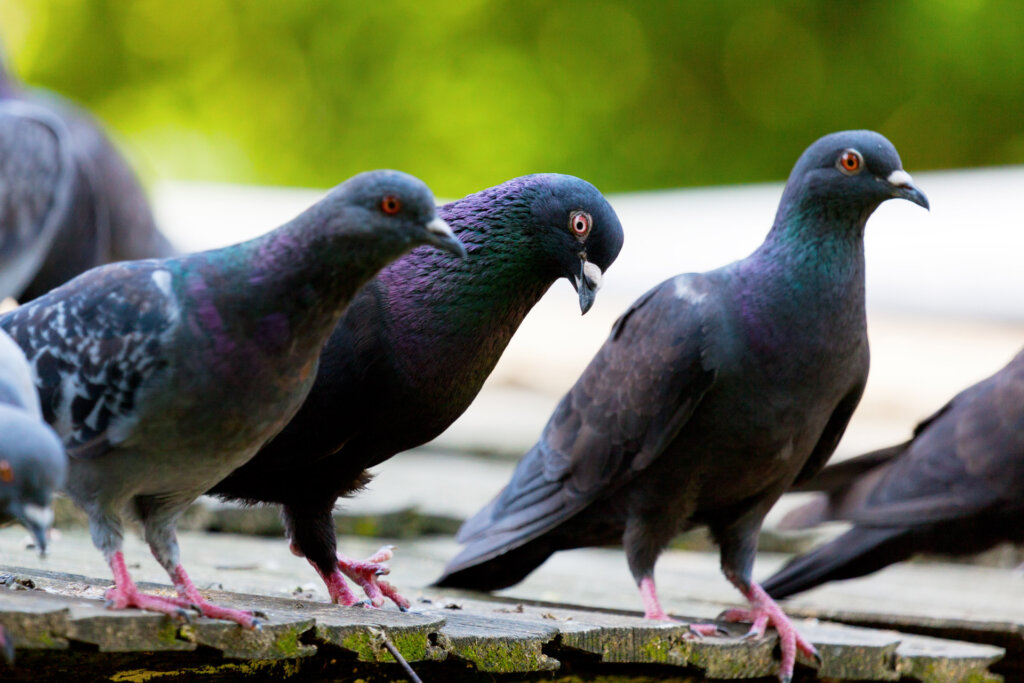
Pigeons
Pigeons nest on flat surfaces of roofs, such as flat beams inside eaves, as well as the outside of roofs such as gutters, air conditioning units and solar panels. Their nests are usually simple platforms made of sticks and debris.
Their nests can block gutters and drains, leading to water damage and roof leaks. Pigeon droppings are highly acidic and can cause significant damage to buildings and roofing materials. They also pose a health risk due to the pathogens they can carry. Pigeons breed rapidly, and a small problem can quickly escalate into a large infestation.
Because these birds have adapted so well to urban environments, they can be a year-round nuisance! If you have a pigeon nest in your roof, you should prioritise removing it to prevent damage. We recommend using pigeon pest experts to reduce the risk of disease exposure to you.
Pigeons nesting on solar panels
Pigeons commonly perch or nest in between the gaps underneath solar panels. With more people taking the plunge and investing in renewable energy sources, the significant upfront investment must be protected.
Pigeon proofing solar panels involves introducing bird spikes to prevent them from landing around the panels, as well as making your home or business less appealing to pigeons more generally.
At Total Pest Control, we offer solar panel pigeon proofing services to prevent pigeons nesting on roof solar panels.
Seagulls
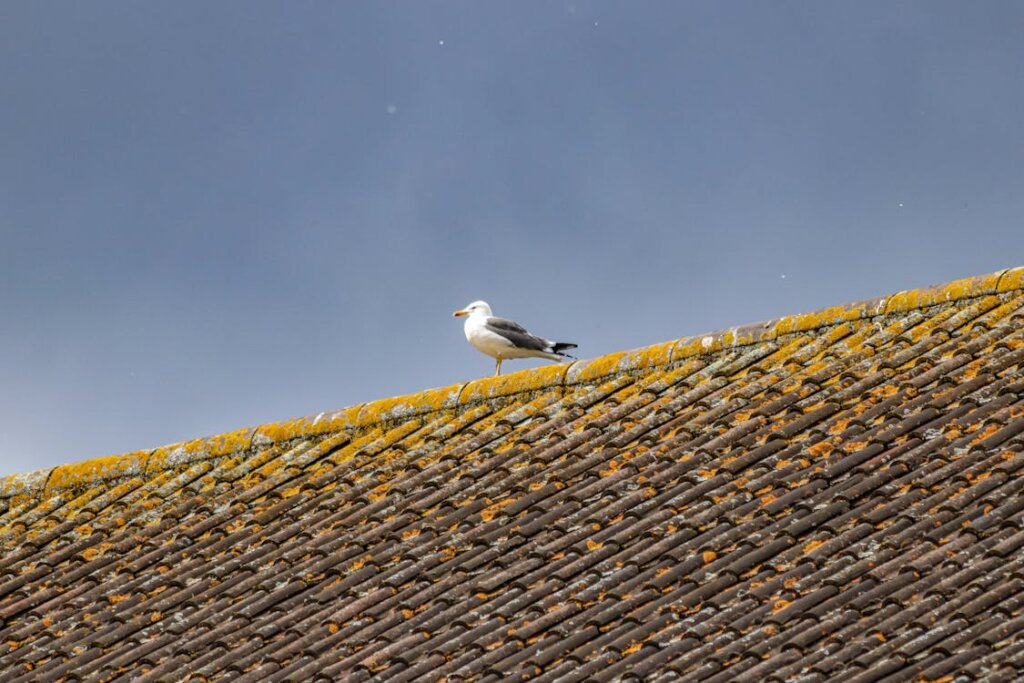
Seagulls are one of the most common birds to nest in and on roofs, especially in coastal areas. They typically build their nests in high places, such as rooftops, to keep their eggs safe from predators.
These birds are highly adaptable and can thrive in urban environments where food is plentiful. Seagulls are medium to large birds with white and grey plumage, long wings, and stout bills. Their nests are often made from grass, seaweed, and other available materials.
Seagulls are known for their loud and persistent calls, which can be a significant disturbance. During the nesting season, seagulls can become very protective of their nests and may act aggressively towards humans and pets. Their droppings can damage roofing materials and create unsanitary conditions. This is why stopping birds from nesting in roofs is essential.
Because seagulls are larger birds and can be aggressive, you should use seagull pest experts rather than try to remove a seagull nest yourself.
Mud-nests (directly under eaves)
Swallows
Swallows commonly nest directly onto the underside of eaves and can be recognised by their mud-built nests, typically on eaves junctions. They are small, agile birds with long, pointed wings. They are common birds found nesting in roofs.
Swallows build mud nests on vertical surfaces, often under eaves and overhangs. Their nests can stain building exteriors and their droppings can create large messes.
Prevent swallows from nesting in your roof by installing bird spiking and using repellents can help keep swallows away from buildings.
House martins
Similar to swallows, house martins often nest in eaves. They can be recognised by their dome-shaped mud nests with a hole at the very top.
The solution to preventing house martins from nesting in roofs is the same as swallows: use bird spiking to reduce access.
Cavity nests (inside eaves and soffits)
Starlings
Starlings often nest in cavities and can be found under roof tiles and in vents. They are most notable for their noise! They also block vents, and their droppings can even damage property.
Starlings are small to medium-sized birds with dark, speckled plumage.
To prevent starlings from nesting in your roof, try bird-proofing techniques like installing vent covers and using bird netting to deter starlings from nesting.
House Sparrows
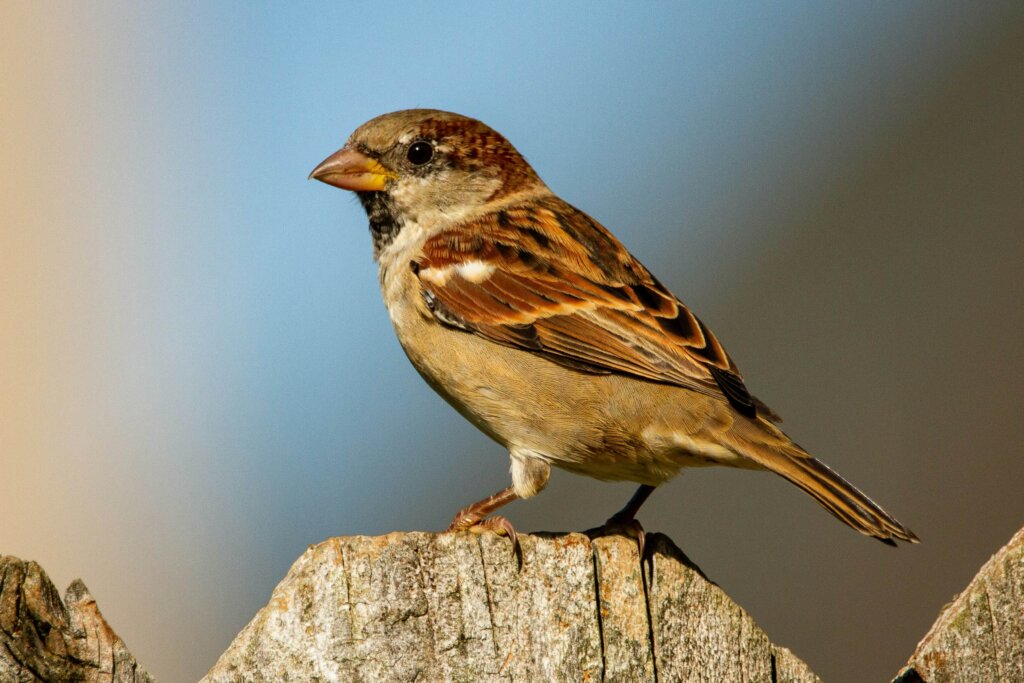
House sparrows build nests in small crevices, including roof eaves and gaps in buildings. Their nests can clog gutters and downspouts, leading to significant water damage.
House sparrows are small, brown-grey birds that are highly adaptable to urban environments.
To prevent house sparrows from nesting in your roof, seal gaps and use bird netting.
How to prevent birds nesting in roofs or eaves
The best way to stop birds nesting in eaves or roofs is to deter them or prevent them from getting in before they start nest building.
At Total Pest Control, we provide several effective bird control services to prevent birds nesting in eaves. We offer bird spiking, bird netting and other bird proofing techniques to deter birds from nesting. We also remove birds from roofs with highly trained birds of prey. Learn more about how our specialist bird control solutions can help eradicate your infestation.
Bird Spiking
Installing bird spikes on ledges and flat surfaces can deter seagulls from landing and nesting.
Bird Netting
Bird netting can cover large areas and prevent seagulls from accessing potential nesting sites.
Birds of Prey
Our fully trained and experienced handlers use birds of prey to remove birds nesting on roofs.
Bird Proofing
We use bird proofing techniques to stop birds from nesting in eaves and to prevent them returning.
Guano Removal
Guano removal services ensure that your property is fully cleaned once bird control has been implemented.
Is it legal to remove nesting birds from roofs and eaves?
In some cases, it’s illegal to remove bird nests from eaves and roofs – where the nests contain eggs or flightless chicks. However, there are exceptions where the nest poses a health risk.
In the UK, under the Wildlife and Countryside Act, there are limitations and laws that prevent some nests being removed. Specifically, it is illegal to remove or disturb active nests containing eggs or the flightless chicks of wild birds.
However, if the nest poses a health risk (for example, blocking a gas flue or vital ventilation) then pest control experts (such as Total Pest Control) can apply for a licence to remove the nest. The best thing to do is to contact experts. We will be able to advise on whether removal of the nest is legal, and help to do so.
Conclusion
Birds nesting in roofs can be a significant problem, causing damage and creating health hazards. At Total Pest Control, we offer a range of bird control solutions tailored to address these challenges effectively. Whether you’re dealing with seagulls, pigeons, or other bird pests, our expert team can help protect your property by ensuring effective bird removal from roofs. Contact us today to arrange a site visit or for more information about our bird control services. Our team are experienced, fully qualified and has the ability to tackle any bird infestation.