Small flies hovering over the fruit bowl and bigger ones buzzing round the bin come from different places and need different treatment. This guide explains how to tell fruit flies apart from house flies and how to get rid of each one.
Quick Answer
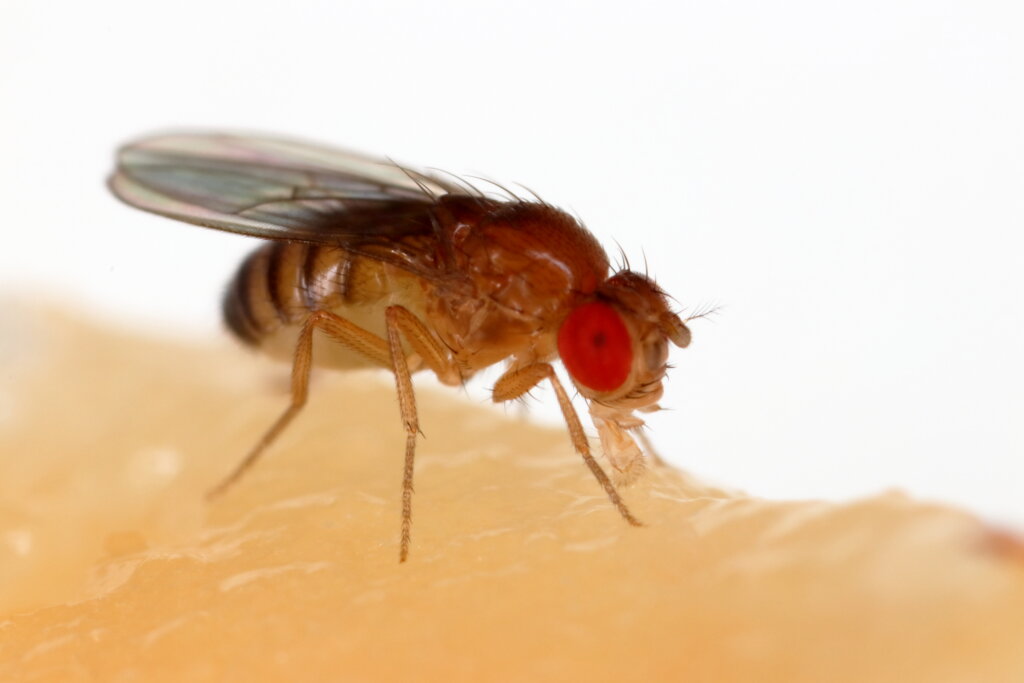
Fruit flies are tiny, around 3mm long, with red eyes and a tan body. They breed in fermenting fruit and the gunk in drains, so the fix is to find and remove the source. House flies are bigger, at 6 to 7mm, with a grey body and four dark stripes on the back. They breed in rubbish and food waste, so keeping waste covered and out of reach is most important. Using the wrong method, such as a vinegar trap for house flies, won’t solve the problem.
Fruit Flies vs House Flies at a Glance
When you’re comparing a fruit fly vs a house fly, the quickest way to tell them apart is to look at size and where the flies gather.
| Feature | Fruit fly | House fly |
|---|---|---|
| Size | About 3mm | 6 to 7mm |
| Colour | Tan or yellowish brown body | Grey body with four dark stripes on the thorax |
| Eyes | Usually bright red | Reddish brown, large |
| Flight | Slow and hovering, close to the source | Fast and erratic, around the room |
| Where you’ll see them | Fruit bowls, recycling, wine glasses, sinks, and drains | Bins, kitchen worktops, windows, and pet food |
| Where they breed | Fermenting fruit, sweet drinks, food waste, and drain residue | Rubbish, food waste, compost, and manure |
| Eggs | Up to 500 per female | 120 to 150 at a time, up to 900 over a lifetime |
| Main concern | Nuisance and food contamination | Can carry food poisoning bacteria onto food |
| Best first step | Find and remove the breeding source | Remove waste and keep flies out. |
How to Identify Fruit Flies
Fruit flies are the tiny flies you see drifting around ripe bananas or the dregs of a wine bottle. The British Pest Control Association (BPCA) describes them as very small flies of about 3mm, and many species have prominent red eyes. They fly slowly and tend to hover with their abdomen hanging down.
Start by checking nearby breeding sites, but remember the source isn’t always directly beneath the flies. If you see a cloud of them hovering over a fruit bowl or sink, look around the wider area, especially forgotten corners and nearby plugholes. A BPCA technical article on small flies puts it: always check the drains, as there’s likely one you’ve missed.
Fruit flies breed fast. A female can lay up to 500 eggs on fermenting fruit, and the whole life cycle from egg to adult can take just eight to ten days in warm conditions. That’s why a few flies can turn into dozens within a week or so.
How to Identify House Flies
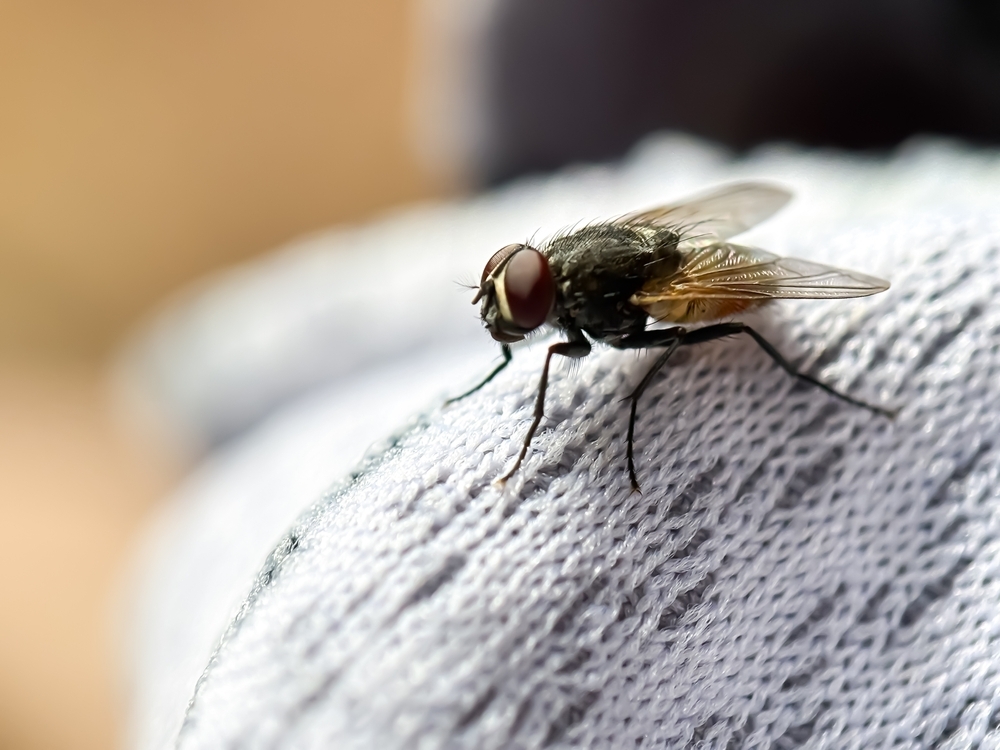
House flies are the familiar grey flies that zip around the kitchen and land on everything. They are 6 to 7mm long, with reddish eyes and four narrow black stripes on the thorax. Their sponging mouthparts are built for soaking up liquids, which is why they land on food and spread whatever they’ve picked up.
House flies lay their eggs in moist or rotting matter, such as household rubbish or manure. A female lays 120 to 150 eggs at a time, and those eggs can hatch in as little as eight hours in warm weather.
Late summer is their busiest time. House fly numbers peak in August and September. Breeding slows as temperatures fall in October, but it can carry on inside heated buildings. That’s why you may still see a few house flies indoors well into autumn.
If the larger flies you’re finding are slow and sluggish, and gather at upstairs windows from September onwards, they may be cluster flies instead. Our guide to why cluster flies appear in autumn explains how to spot them.
Is It Actually a Fruit Fly?
Not every small fly in the kitchen is a fruit fly. Two lookalikes cause a lot of confusion, and they need different treatment.
Drain flies (also called owl midges or moth flies) are 2 to 5mm long, distinctly fuzzy, and hold their broad wings in a roof-like tent over their body. While both fruit flies and drain flies gather around sinks, drain fly larvae develop specifically in the organic film lining wet drains and sewage pipes rather than in fermenting food.
Drain flies, also called owl midges or moth flies, are 2 to 5mm long and look fuzzy, with their wings held over the body like a pitched roof. Both they and fruit flies gather around sinks, but drain fly larvae live in the organic film inside wet drains and pipes. Our guide to big black flies in your house covers drain flies in more detail.
Fungus gnats are the small dark flies that run across the soil of houseplants. The Royal Horticultural Society (RHS) says they thrive in damp compost with lots of organic matter. If you’ve been searching for how to get rid of fruit flies in plants, you’re most likely dealing with fungus gnats, and letting the top layer of compost dry out between waterings is the best place to start, provided the plant tolerates it.
Why Do I Have Fruit Flies in My House?
Fruit flies in the house are drawn to anything sweet or fermenting. In autumn, that often means windfall apples or a recycling bin full of juice cartons. Common sources include:
- overripe fruit and vegetables, especially bananas and tomatoes
- empty wine and juice bottles waiting for recycling
- food caddies and compost bins
- sink plugholes and drains with a build-up of food residue
- spilt drinks under fridges or behind kitchen units
- forgotten milk bottles, which the BPCA notes one species breeds in.
Once they find a good spot, they breed quickly. Clearing the flies you can see won’t help for long if eggs and larvae are still sitting in a forgotten potato or a sticky drain.
How to Get Rid of Fruit Flies in Your House
The only reliable way to get rid of fruit flies is to find and remove the place they’re breeding. Traps and sprays target the adults, but new ones will keep hatching until the source is gone. You need to tackle the whole life cycle, from egg through to fully grown fly.
Start by clearing out the fruit bowl and moving ripe fruit into the fridge. Rinse bottles and cans before they go in the recycling. Empty the food caddy often, and clean underneath it. Check the cupboard where you keep potatoes and onions, as one rotten item can support a lot of flies.
Next, clean your drains. Which? suggests pouring boiling water down kitchen sink plugholes to kill eggs and larvae. Then scrub around the drain cover to remove the build-up of film. Check sink strainers, plugholes and accessible drain components for food residue. Scrub away the organic film where flies can breed. A suitable enzymatic drain cleaner may help remove build-up; follow its instructions. If flies keep appearing around one particular sink, the drain is the likely culprit. Persistent problems may need a drain inspection.
Top tip: covering an unused sink’s drain opening with a clear plastic bag overnight can help establish whether adult flies are emerging there.
Make a DIY Fruit Fly Trap
A homemade fruit fly trap catches the adults while you deal with the source. Add a little cider vinegar or old wine with a drop of washing-up liquid, then cover the jar with cling film and poke a few small holes in the top. The smell draws the flies in, and they can’t get back out. For small outbreaks, a household fly spray is another option, as long as you follow the label and keep it away from food.
How to Get Rid of House Flies
House fly control starts with removing breeding material and keeping flies out. Suitable traps and fly baits can help reduce adult numbers, but they won’t solve the problem as long as accessible waste remains.
Keep food covered and put leftovers away promptly. Use bins with close-fitting lids, and bag food waste before it goes in the wheelie bin. Don’t leave pet food down all day, and clean up after pets in the garden regularly, as droppings are an ideal breeding ground.
Fly screens on kitchen windows and doors help keep house flies out during warm weather. Indoors, flypapers and fly sprays can deal with the ones already inside. Electric UV fly killers also work, although where you place them affects how well they perform. If you’re finding large numbers of house flies or bluebottles indoors with no obvious cause, check for a dead animal under floorboards or in the loft, as this is a common hidden source.
Flies in Commercial Kitchens and Food Businesses
In a café or food production site, any fly is a food safety problem. Flies can spread foodborne bacteria such as Salmonella and Campylobacter, and fruit flies breeding in a bar’s drip trays can quickly put customers off.
The Food Standards Agency’s Safer Food, Better Business guidance tells food businesses to call a pest contractor straight away if they find signs of an infestation, and to record what went wrong and what they did about it. An environmental health officer may ask to see that record.
The FSA also advises throwing away any food that pests may have touched, then cleaning and disinfecting equipment and surfaces before using them again.
For most food businesses, flies are best handled through a regular pest control contract. That usually combines routine inspections with electric UV fly killers placed away from food preparation areas. Our commercial pest control contracts include electronic reports and portal access, so your records are ready when an environmental health officer visits.
When to Call a Professional
Most fruit fly problems at home can be solved by finding the source. It’s worth calling a pest control technician if:
- flies keep coming back after you’ve cleared fruit and cleaned drains
- you can’t find where they’re breeding
- you have large numbers of house flies or bluebottles indoors with no obvious cause
- you run a food business and need documented pest control
A technician will look for hidden breeding sites, such as faulty drains or dead animals, and recommend the right treatment for the type of fly. Our domestic pest control page explains how we work in homes, and our guide on why you need pest control covers when DIY stops being enough. Our technicians cover homes and businesses across Oxford and Birmingham, as well as much of southern England and the Midlands. You can find out more on our flying insect pest control page.
Fruit Fly and House Fly FAQs
If you’re still not sure which flies you’re dealing with, these short answers cover the questions people ask most about fruit flies vs house flies.
Do fruit flies bite humans?
No. Fruit flies don’t bite humans or pets. Which? notes that they can still carry harmful bacteria from places like kitchen bins onto worktops and food, so it’s worth dealing with them quickly even though they won’t leave bites on your skin.
Do fruit flies turn into house flies?
No. Fruit flies and house flies are different types of flies. An adult fruit fly doesn’t grow into a house fly. If you’re seeing both, identify each type and check for breeding sites; the same waste area may attract more than one kind.
Where do fruit flies come from?
Fruit flies are attracted indoors by the smell of ripe or fermenting food. Their eggs and larvae often arrive on fruit and vegetables. Females then lay more eggs in fermenting fruit and in the film inside drains, where the larvae feed and grow. Removing those breeding sites is the only way to stop new flies hatching.
Are house flies dangerous?
House flies can carry bacteria on their body hairs, sticky feet, saliva and droppings, which they can transfer onto food and surfaces. Good kitchen hygiene helps reduce the chance of flies contaminating food. In food businesses, they’re treated as a serious food safety issue.
Why do I have small flies in my house?
Small flies in the house are usually fruit flies, drain flies, fungus gnats, or phorid flies. Where you see them is the best clue. Flies around the fruit bowl point to fruit flies, while flies hovering over houseplants are more likely fungus gnats.
How quickly do fruit flies breed?
Very quickly. In warm conditions, a fruit fly can go from egg to adult in eight to ten days, and a single female can lay up to 500 eggs. A small problem can become a big one within a week or two if the source isn’t removed.
Get Help with Flies in Your Home or Business
If flies keep coming back however much you clean, our local team can track down the source. Total Pest Control is a full member of the British Pest Control Association, and we help homes and food businesses deal with all kinds of flying insects.
Call us on 0800 772 0554 or request a callback, and one of our technicians will be in touch.
Article Sources
1. British Pest Control Association. Pest advice for controlling fruit flies. Accessed 23/10/2026
2. British Pest Control Association. Know your enemy: the key to tiny fly control. Accessed 23/10/2026
3. Understanding Animal Research. Fruit fly. Accessed 23/10/2026
4. Royal Horticultural Society. Fungus gnats (sciarid flies). Accessed 23/10/2026
5. Gov.uk. Safer Food, Better Business: Pest control. Accessed 23/10/2026
6. Which? How to get rid of fruit flies and stop them coming back. Accessed 23/10/2026
7. Antrim and Newtownabbey Borough Council. House flies. Accessed 23/10/2026
8. Test Valley Borough Council. Common house fly. Accessed 23/10/2026
9. Plymouth City Council. Flies. Accessed 23/10/2026
10. University of Wisconsin-Madison Division of Extension.Fruit flies in the home. Accessed 23/10/2026.