If your windows or loft fill up with slow, dozy flies every October, you’re probably dealing with cluster flies in the house. This guide explains why they turn up in autumn and how to deal with them in your home.
Quick Answer
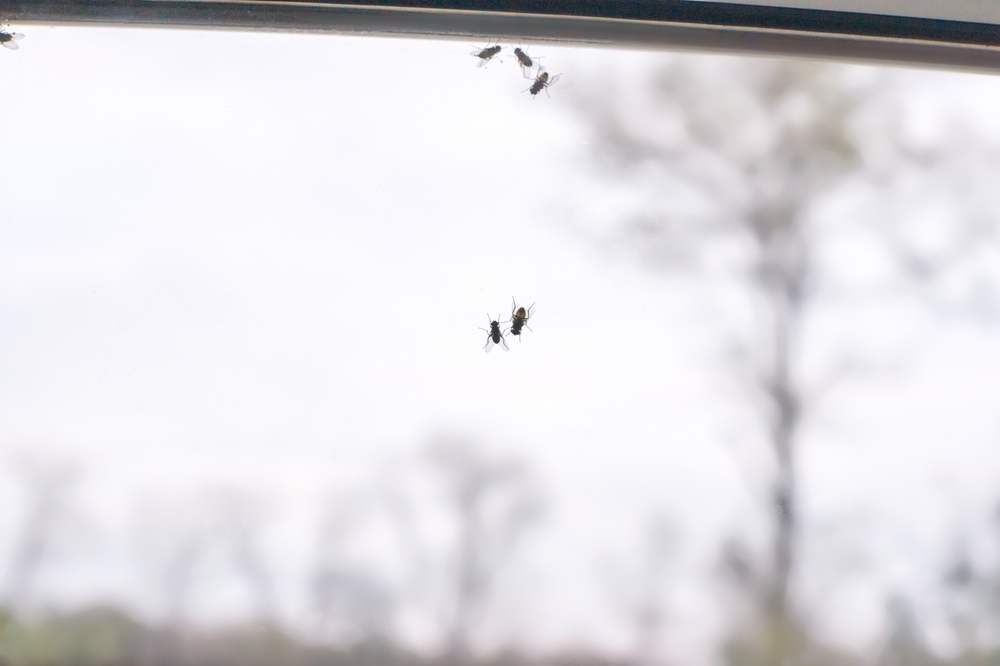
Cluster flies appear in autumn because they’re looking for somewhere to hibernate. Through the summer, they live outdoors in fields and gardens. When the weather cools, usually from September onwards, they gather on sunny walls and crawl through gaps around the eaves and window frames to spend the winter in lofts and wall cavities. On mild days, or once the heating comes on, some of them wake up and wander into your rooms, which is why cluster flies in the house seem to appear out of nowhere.
What Are Cluster Flies?
Cluster flies are a group of flies in the genus Pollenia. Pollenia rudis is one of the species commonly found in British homes. They are a little larger than a house fly, at around 6 to 7mm long, with a dark body and fine golden hairs on the thorax, the section of the body just behind the head.
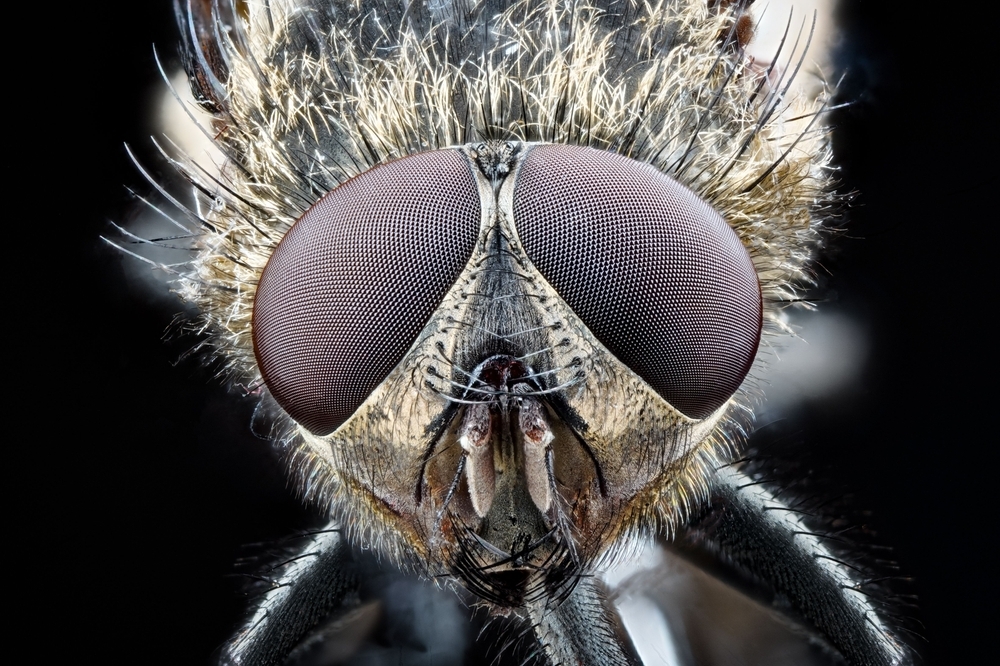
They get their name from the way they bunch together in large groups during hibernation. You will often find them packed into the corners of window frames or gathered on the beams in a loft. They are clumsy fliers, especially when cold, and tend to bump against the glass.
If you’re not sure whether you have cluster flies or another large fly, our guide to identifying big black flies in your house covers the most common lookalikes.
How Cluster Flies Get Into Your Home
Cluster flies turn up in autumn because that’s when they start looking for somewhere to spend the winter. In the wild, they hibernate under loose bark or inside hollow trees. A house near open fields offers something similar, with plenty of dry, sheltered gaps that stay above freezing.
On bright autumn days, the flies gather on the outside of buildings to warm up. Cotswold District Council notes that they favour sunny, light-coloured walls facing south-east. As the afternoon cools, they look for shelter and crawl inside, mainly under the eaves and fascia boards into the roof space, and sometimes through gaps around window frames.
This is why cluster flies can appear in your house all of a sudden. One week there are a few flies on the windowsill, and the next there are dozens. Cluster flies often choose the same building year after year, and nobody knows exactly why. Possible explanations include how much sun a building gets, and scent markers (pheromones) left behind by earlier flies, which may help newcomers find the same roost.
Homes in rural areas and on the edge of towns see the most cluster flies, because the larvae depend on fields and lawns full of earthworms. Much of rural Oxfordshire and the Cotswolds fits that description, with homes and farm buildings sitting right next to open grassland.
The Cluster Fly Life Cycle, Season by Season
The life cycle explains why you only notice cluster flies at certain times of year. For most of the summer, they live outdoors and cause no trouble at all.
| Season | What cluster flies are doing |
|---|---|
| Spring (March to May) | Adults wake from hibernation and try to get back outside. You may see them at windows again as they leave. |
| Late spring to summer | Females lay eggs on damp soil and under decaying leaves. The larvae hatch after about a week and burrow into earthworms, feeding inside them before pupating in the soil. |
| Summer | New adults emerge and feed on plant sap and flowers. Britain usually sees two generations a year, and up to four in a warm year. |
| Autumn (September to November) | Adults gather on sunny walls, then move into lofts and wall gaps to hibernate. |
| Winter | Most flies remain dormant in the roof space. Mild spells or central heating can wake some, and these wander into living areas. |
Why Are Cluster Flies in My Loft?
A loft is close to ideal for a hibernating cluster fly. It is dry and rarely disturbed, with plenty of small gaps around tiles and timbers for flies to squeeze into. The British Pest Control Association (BPCA) says heavily infested buildings can hold several thousand cluster flies.
Most flies in the loft stay out of sight in the roof space all winter. The ones you notice are usually the ones that have strayed down into the house. When the sun warms the roof or the heating comes on, some flies become active and head towards the light. That leads them to upstairs windows and light fittings, where many of them end up dying on the sill.
While you’re checking the roof space, keep an eye out for other pests that like lofts. Our guides to wasps in the loft and rats in your loft explain the signs to look for.
Are Cluster Flies Harmful?
Cluster flies are a nuisance, but they aren’t considered a health risk. Bromley Council states that they do not normally represent any health risk. They don’t breed indoors or lay eggs on food the way house flies can, and Cotswold District Council is clear that their presence isn’t a sign of poor hygiene.
The real problems are the numbers involved and the smell. Large clusters can give off an unpleasant odour, and dead flies build up on windowsills and loft floors, so they need to be cleared out regularly.
How to Get Rid of Cluster Flies in Your House
Home methods work well on the flies you can see. They are much less effective against flies tucked away in the roof space, which is where most of them will be.
Important note: Before using insecticides or sealing gaps in a roof space, check whether bats or a bat roost may be present. If their presence is known or suspected, contact the Bat Conservation Trust’s National Bat Helpline before proceeding.
Vacuum Them Up
A vacuum cleaner with a hose attachment is the simplest way to clear flies from windows and light fittings — empty the bag or bin outside straight away so any live flies can’t crawl back out.
Use a Fly Spray Carefully
An ordinary aerosol fly spray will kill the cluster flies it hits, but it won’t reach the ones hidden in cracks around tiles and timbers. Always follow the label instructions and keep sprays away from food and pets.
Take Care with Smoke Bombs
Insecticide smoke generators, often sold as cluster fly smoke bombs, are a popular choice for lofts. The BPCA warns that products with a fuse-lit mechanism carry a fire risk, so read the instructions closely before using one. Follow the product label exactly, including instructions on ventilation and when it is safe to re-enter the treated area. If you are unsure whether a product is suitable for your loft, ask a pest control professional.
Seal the Gaps You Can Find
Sealing gaps around window frames and repointing loose mortar can help a little. Proofing rarely keeps cluster flies out completely, as they can fit through very small spaces. Fly screens won’t stop them either, since most get in around the roof.
Clean Up Once the Season Ends
When the flies have left in spring, clear the dead ones out of the loft and off the windowsills. Bromley Council suggests that thoroughly cleaning the affected area may discourage flies from returning the following year.
Check for Bats Before You Treat a Loft
Bats are protected in the UK, and Cotswold District Council warns it’s illegal to use insecticide if there’s any chance it could reach them.
When to Call a Professional
It’s worth bringing in a pest control technician if:
- cluster flies return in large numbers every autumn
- vacuuming and sprays aren’t keeping up with them
- your loft is hard or unsafe to get into
- you have a large or older building, such as a farmhouse or barn conversion
- you think bats may be roosting in the roof.
A professional treatment usually starts with an inspection to find where the flies are getting in and where they’re hibernating. Depending on the building, a technician may use an ultra-low-volume (ULV) fogger, which disperses a fine insecticide mist into voids that a hand spray can’t reach. Another option is a residual spray, which continues to work against newly emerging flies for several months. The BPCA also notes that electric UV fly killers can help when they’re switched on during the months the flies are active.
Our technicians cover homes across Oxfordshire and Gloucestershire, as well as much of southern England and the Midlands. You can read more about our cluster fly control service or our wider domestic pest control work. For other flying insects, such as wasps and moths, see our flying insect pest control page.
Cluster Flies FAQs
If you’ve found cluster flies in your loft or at your windows, you’ll probably have a few more questions. Here are short answers to the ones homeowners ask most about these autumn visitors.
Where do cluster flies come from?
Cluster flies come from the soil in fields and lawns. Their larvae develop inside earthworms, then pupate in the ground and emerge as adult flies in summer. That is why homes in the countryside, or next to large areas of grass, tend to see the most of them each autumn.
How long do cluster flies live?
Adults that emerge in late summer can survive the winter while hibernating, then emerge in spring to breed. That means a single fly can live for several months.
Why are there so many flies in my house in autumn?
If dozens of large, sluggish flies have turned up at your windows in September or October, they’re most likely cluster flies looking for somewhere to hibernate. They gather on sunny walls, then crawl in through gaps around the eaves. Tiny flies around ripe fruit may be fruit flies, while flies gathering around food waste may be house flies.
Why do I have flies in my house in winter?
Large, slow flies on upstairs windows in winter are usually cluster flies that were hibernating in your loft or wall cavities. A run of mild weather or the central heating can wake them up. Once awake, they head towards the light and end up at the windows.
Do cluster flies lay eggs in the house?
No. Cluster flies lay their eggs outdoors on damp soil, and their larvae need earthworms to develop. They do not breed inside your home; autumn infestations consist of adult flies seeking somewhere to overwinter.
Will cluster flies come back every year?
There’s a good chance they will. Cluster flies often return to the same building year after year, possibly guided by scent left by previous groups. Sealing gaps and clearing out dead flies may reduce the numbers, and a professional treatment can cut down how many settle in the roof space.
Are cluster flies the same as house flies?
No. Cluster flies are slightly larger and slower, with golden hairs on the thorax. House flies breed in rubbish and food waste and can carry bacteria onto food, whereas cluster flies breed outdoors in soil. Our guide to fruit flies vs house flies explains house flies in more detail.
Get Help with Cluster Flies
If cluster flies are taking over your loft or windows every autumn, our local team can help. Total Pest Control is a full member of the British Pest Control Association, and we can arrange a free, no-obligation survey to find out where the flies are getting in.
Call us on 0800 772 0554 or request a callback, and one of our technicians will be in touch.
Article Sources
1. British Pest Control Association. PestWatch: Cluster flies, advice for professional pest control. Accessed 23/10/2026
2. Cotswold District Council. Cluster fly fact sheet. Accessed 23/10/2026
3. London Borough of Bromley. Cluster flies. Accessed 23/10/2026.